Ford Coyote 5.0L Gen 1: Mustang & F-150 Specs, PCM & Maintenance
Ford · Gasoline engine
Coyote 5.0LGeneration 1
Four cams, 32 valves and independent cam timing changed Ford’s V8 formula. The first Coyote serves both the high-revving Mustang and the torque-focused F-150 with different specifications.
Specifications
Engine construction
- Displacement
- 4,951 cc
- Layout
- 90° V8 · DOHC · Ti-VCT
- Block / heads
- Aluminium / aluminium
- Cam drive
- Timing chains
Variant differences
- Mustang compression
- 11.0:1
- Truck compression
- 10.5:1
- Injection
- Port fuel injection
- Ignition
- Coil on plug
Vehicles & factory output
| Engine variant | Vehicle | Model years | Platform | Factory rating |
|---|---|---|---|---|
| Coyote Gen 1 · Mustang | Ford Mustang GT | 2011–2012 | S197 | 412 hp / 390 lb-ft |
| Revised Mustang output | Ford Mustang GT | 2013–2014 | S197 | 420 hp / 390 lb-ft |
| Coyote Gen 1 · truck | Ford F-150 | 2011–2014 | P415 | 360 hp / 380 lb-ft |
Factory GT and truck ratings are shown. Boss 302 is a distinct performance variant and is not represented by the regular GT rating.
Engine controller
| Application | Supplier & family | Hardware / identification |
|---|---|---|
| Mustang GT · 2011–2014 | Continental 5WY8 | MPC5554; commonly discussed as Copperhead-generation Ford control. |
| F-150 · 2011–2014 | Continental 5WY8 application family | Truck hardware and software differ from the GT. |
Copperhead is useful naming, but the full hardware number and strategy determine the application. The PCM coordinates electronic throttle, port injection and independent cam timing on both banks. Match the complete Ford engineering/service number, supplier hardware ID and diagnostic strategy/calibration ID. The same engine size can use different modules; processor names alone do not identify an ECU.
Catalogue entries identify application families, not a guaranteed ECU for every build year. Confirm the installed unit.
Common faults & maintenance
- Ticking needs classification. Ford SSM 49761 describes a normal “typewriter” tick on certain 5.0L engines. New loud noise, low oil pressure or a misfire still needs diagnosis; sound alone does not prove engine damage.
- Accessory-belt chirp. TSB 12-8-14 addresses an affected early-engine belt noise condition. Locate the sound before attributing it to the timing chains.
- Misfire, leaks and low oil. Check plugs, coils, PCV plumbing and fluid levels. Repeated high-load use calls for the appropriate maintenance schedule and monitoring between services.
Keep it healthy. Use the Ford oil specification and viscosity for the exact model year. Follow the normal or severe-use schedule for towing, extended idling, dust and repeated short trips; check oil and coolant between services. Diagnose deposits or poor running before prescribing cleaning intervals.
References
| Topic | Source |
|---|---|
| Revised GT factory output | Ford 2013 Mustang brochure |
| Factory output | Ford 2014 F-150 brochure |
| Specifications | Ford 2014 F-150 engine specifications |
| Normal typewriter-tick guidance | Ford SSM 49761 |
| Accessory-belt noise | Ford TSB 12-8-14 |
| Swap controller | Ford Performance M-6017-A504VB |
| 5WY8 hardware | AutoTuner · Continental 5WY8 |
| Vehicle hardware applications | Alientech live vehicle catalogue |
| Ford controller naming | HP Tuners TDN guide · Ford controller families, p. 76 |
| PCM hardware compatibility | BenchForce Copperhead application guide |
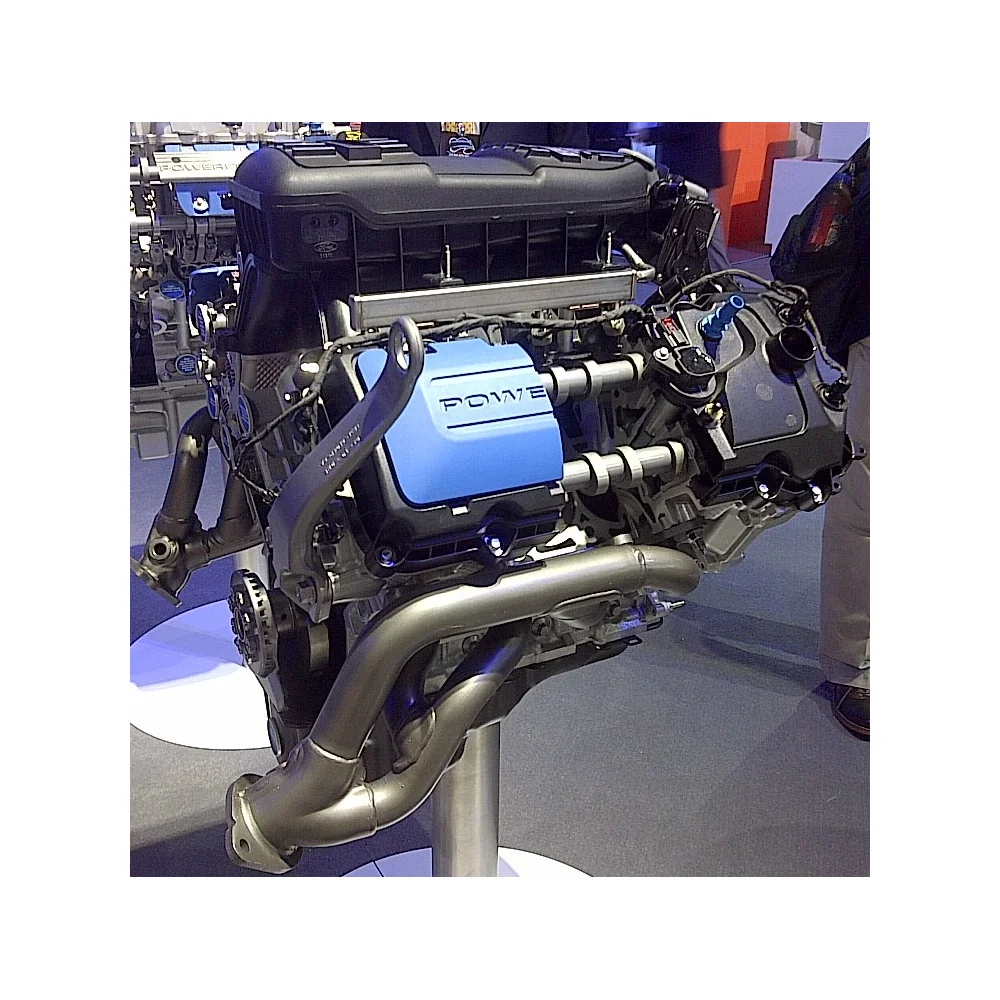
| Engine photo | Boss 302 / Coyote 5.0L cutaway. Photo: artistmac · CC BY-SA 2.0. Cropped/resized and square-formatted. |
Listed vehicles are selected North American applications. Ratings and equipment vary with model year, fuel and emissions specification. Verify the VIN, engine label and PCM identification before ordering parts or software. Service bulletins describe affected conditions and do not establish a failure rate or current warranty entitlement.