Ford EcoBoost 2.0L Gen 2: Twin-Scroll Specs, PCM & Maintenance
Ford · Gasoline engine
EcoBoost 2.0LTwin-scroll · Fusion / Escape
A twin-scroll turbo and revised engine package sharpened the Fusion’s mid-range response. On affected early builds, unexplained coolant loss is the issue to investigate first.
Specifications
Engine construction
- Layout
- Inline-four · DOHC · Ti-VCT
- Block / head
- Aluminium / aluminium
- Valves
- Four per cylinder · 16 total
- Cam drive
- Timing chain
Fuel & boost
- Induction
- Twin-scroll turbo · intercooler
- Injection
- Gasoline direct injection
- Ignition
- Coil on plug
- Drive layout
- FWD or AWD · transverse
Vehicles & factory output
| Engine variant | Vehicle | Model years | Platform | Factory rating |
|---|---|---|---|---|
| Revised twin-scroll 2.0L | Ford Fusion | 2017–2020 | CD4 | 245 hp / 275 lb-ft |
| Twin-scroll 2.0L | Ford Escape | 2017–2019 | C1 | 245 hp / 275 lb-ft |
The Fusion and Escape factory peak ratings use the specified fuel. Hardware, coolant-intrusion bulletin coverage and ECU identification still require the vehicle build date.
Engine controller
| Application | Supplier & family | Hardware / identification |
|---|---|---|
| Fusion · 2017–2020 / Escape · 2017–2019 | Bosch MEDG17.0 family | TC1797; EVC’s Fusion cross-reference uses MED17.2.2. |
| Edge · 2019–2024 | Bosch MG1CS017; MG1CS036 also listed | TC298 / TC399; verify the installed version. |
The twin-scroll engine does not have one universal ECU across Fusion, Escape and Edge. Confirm the label and calibration before selecting a diagnostic or programming definition. Match the complete Ford engineering/service number, supplier hardware ID and diagnostic strategy/calibration ID. The same engine size can use different modules; processor names alone do not identify an ECU.
Catalogue entries identify application families, not a guaranteed ECU for every build year. Confirm the installed unit.
Common faults & maintenance
- Coolant intrusion. TSB 19-2346 describes certain 2017–2019 Fusions with low coolant, white exhaust and rough running. Confirm the affected build and perform pressure testing; replacing coils alone will not correct coolant entering a cylinder.
- Boost and ignition faults. Check plugs, coils, pressure sensors and charge-air plumbing when acceleration becomes uneven. Diagnose the control system before replacing the turbo.
- Oil leaks and intake deposits. Investigate rising oil use, PCV faults and visible leaks. Intake cleaning should follow symptoms and inspection rather than an unsupported fixed interval.
Keep it healthy. Use the Ford oil specification and viscosity for the exact model year. Follow the normal or severe-use schedule for towing, extended idling, dust and repeated short trips; check oil and coolant between services. Diagnose deposits or poor running before prescribing cleaning intervals.
References
| Topic | Source |
|---|---|
| Factory output | Ford 2017 Fusion brochure |
| Coolant intrusion | Ford TSB 19-2346 |
| PCM programming | Ford IDS user manual |
| Application listings | EVC BSL · supported controller families |
| Hardware families by application | BitBox official application list |
| Vehicle hardware applications | Alientech live vehicle catalogue |
| MG1 hardware | AutoTuner · Bosch MG1CS036 applications |
| Escape specifications | Ford 2017 Escape brochure |
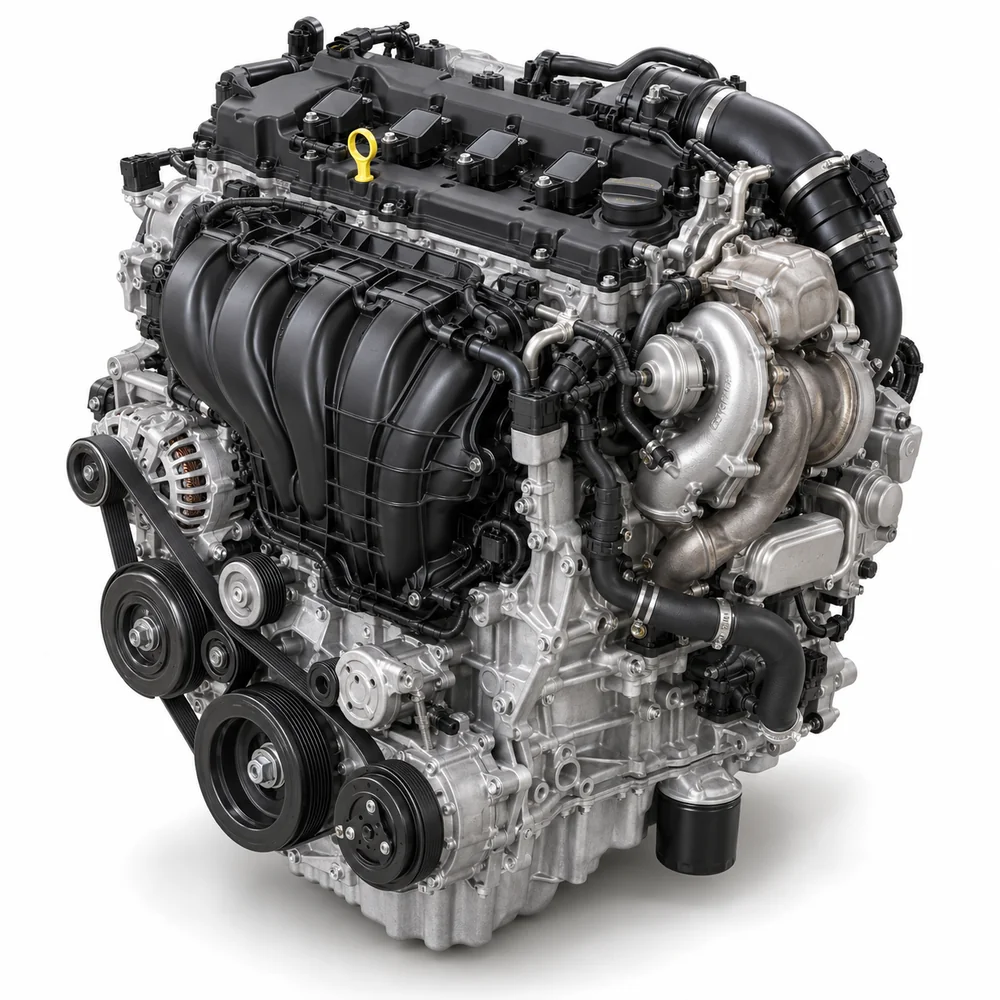
| Engine image | Generated Image. Illustrative engine artwork; component details may differ from a production engine. |
Listed vehicles are selected North American applications. Ratings and equipment vary with model year, fuel and emissions specification. Verify the VIN, engine label and PCM identification before ordering parts or software. Service bulletins describe affected conditions and do not establish a failure rate or current warranty entitlement.