GM Gen III Vortec 4.8L V8 LR4: Specs, Engine Codes, Controllers & Maintenance
Engine Information · GM · Small-block · Gen III
Gen III Vortec 4.8L V8 LR4
The LR4 gives GM’s entry-level V8 trucks a compact, durable small-block foundation. It has conventional port injection and eight active cylinders, with no factory AFM system to diagnose.
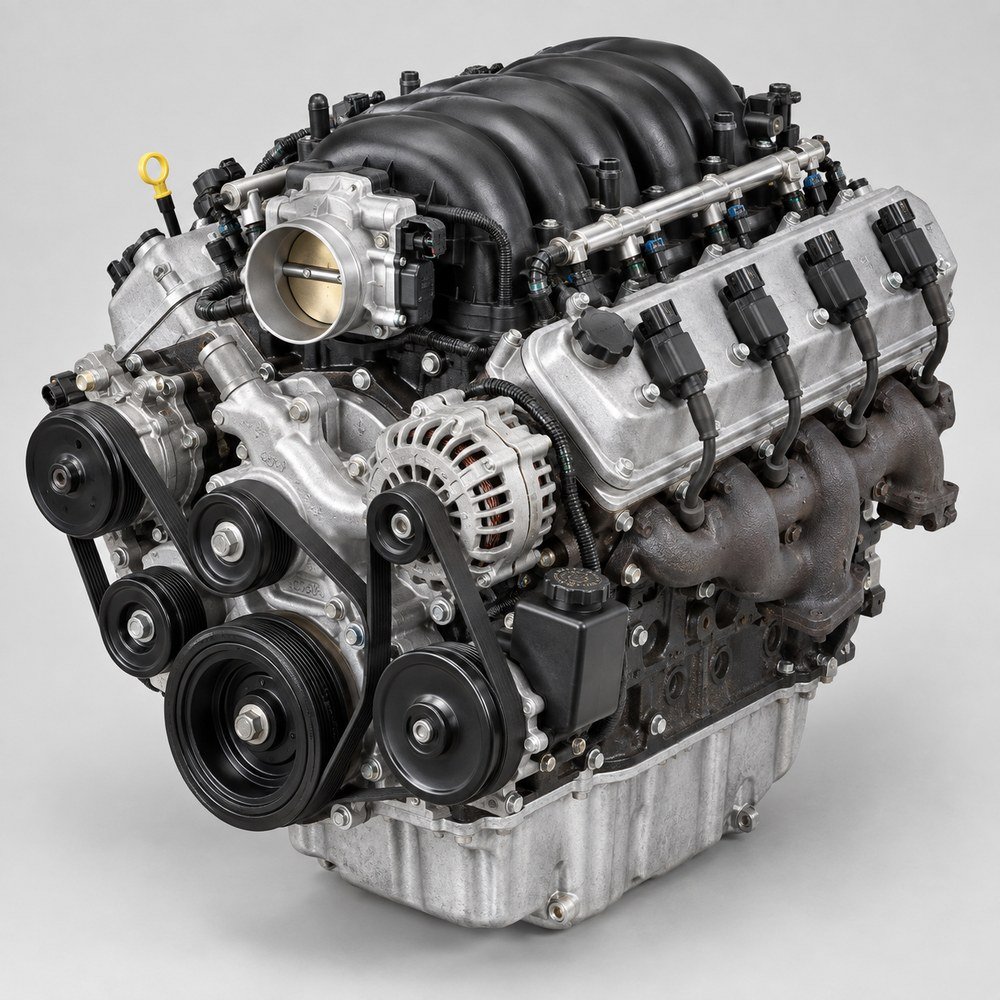
Engine construction
| Specification | Details |
|---|---|
| Capacity / layout | 4.8L · 90° V8 |
| Construction | Iron block · aluminum heads |
| Valve gear | OHV · 16 valves · fixed cam timing |
| Fuel / induction | Sequential port injection · naturally aspirated |
Codes & output
| RPO / version | Power / torque | Key difference |
|---|---|---|
| LR4 | 285 hp / 295 lb-ft | Typical 2005–2006 pickup rating; van calibrations vary |
SAE horsepower; torque in lb-ft. Ratings are for the stated application and fuel, rather than every vehicle with this RPO.
Vehicles & model years
| Brand | Model | Model years | Platform / chassis | Engine RPO |
|---|---|---|---|---|
| GMC / Chevrolet | Sierra / Silverado 1500 | 2005–2006; 2007 Classic | GMT800 | LR4 |
| GMC / Chevrolet | Yukon / Tahoe | 2005–2006 | GMT800 | LR4 |
| GMC / Chevrolet | Savana / Express | 2005–2006 | GMT610 | LR4 |
U.S. and Canadian applications within the 2005–2026 matrix scope. Engine availability depends on trim, build date and emissions certification.
Engine controllers
| Application / revision | ECM or PCM | Identification & function |
|---|---|---|
| 2005–2006 / Classic truck applications | GM P59 PCM · EFILive LS1B family | 24x-era crank signal, fuel and spark control; do not substitute an E38 Gen IV module |
Identify the module from its service number, operating-system ID and VIN. The ECM/PCM and transmission controller have separate calibrations on many applications; a matching RPO alone does not make a replacement module plug-and-play.
Common issues & maintenance
- Knock-sensor / intake faultsWater intrusion around the knock-sensor area and intake leaks can produce fault codes or lean running. Confirm the wiring and sealing.
- Oil-pressure concernsA low reading needs verification with a mechanical gauge; inspect oil level, sensor circuit and pickup sealing before condemning bearings.
- Age-related misfiresPlugs, coils, leads and fuel delivery remain normal diagnostic starting points.
Keep it healthy. Use the oil grade and specification in the model-year owner’s manual. Check the dipstick between services; towing, idling and short trips change oil-life demands. Repair coolant leaks promptly, keep the cooling stack clear and investigate a new tick or misfire before it damages the camshaft or catalyst.
References & technical sources
| Source | Reference |
|---|---|
| GM applications & RPO diagnostic matrices | View source |
| EFILive GM gasoline controller families | View source |
| GM V8 oil-consumption diagnostic bulletin | View source |
| GMC 2005 Sierra factory brochure | View source |