AJ126 · 306PS
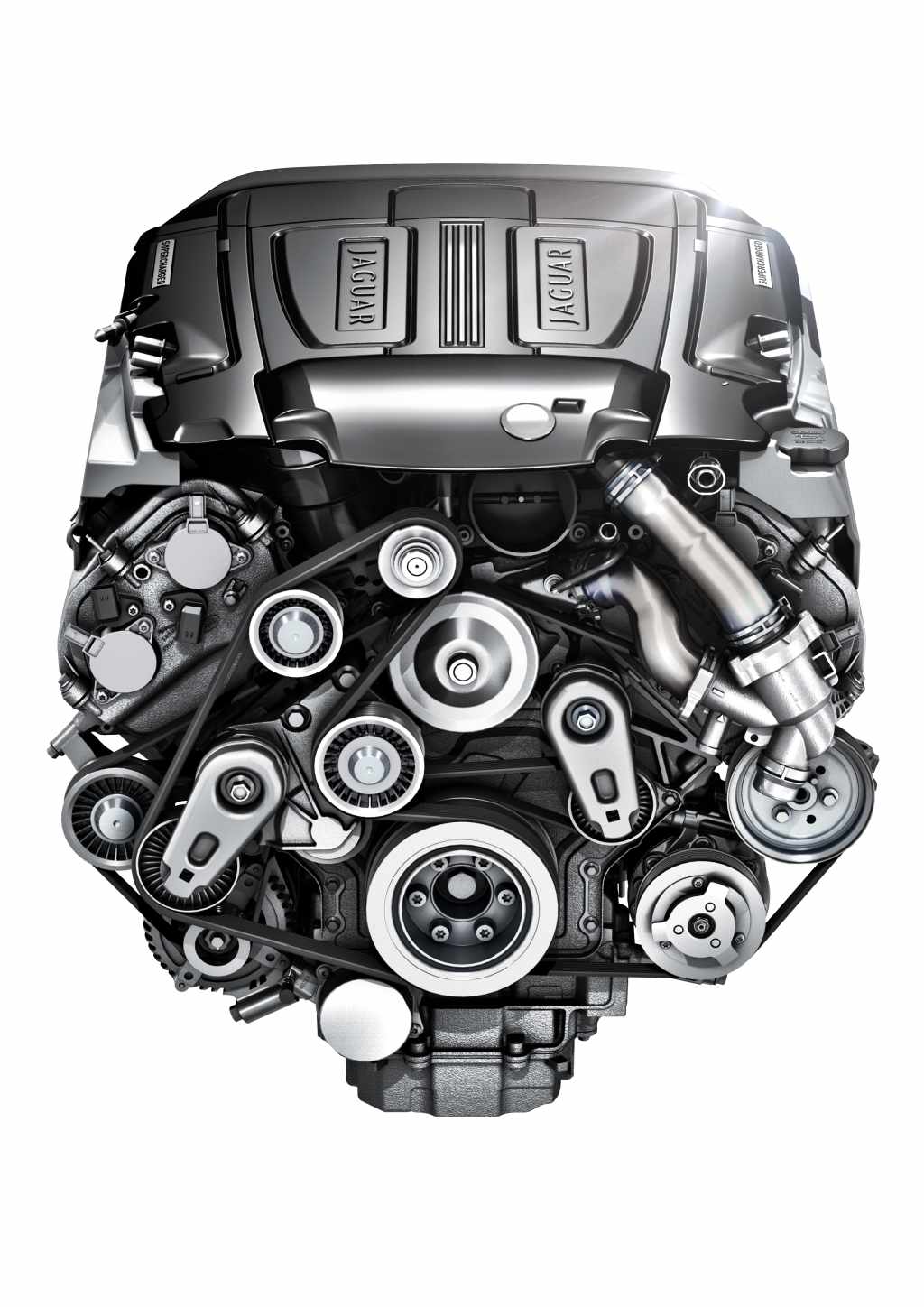
AJ126 3.0Supercharged V6
The AJ126 delivers its punch through a belt-driven supercharger, giving Jaguar sports cars and Land Rover SUVs a strong, immediate response. Its 340 and 380 hp versions share the same 3.0-litre V6 foundation, with cooling-system condition central to long-term care.
Specifications at a glance
Engine & construction
- Engine code
- 306PS (AJ126)
- Layout
- 90° V6 · petrol
- Block / head
- Aluminium / aluminium
- Bore × stroke
- 84.5 × 89.0 mm
- Compression
- 10.5:1
- Generation
- AJ-V6 Gen III
Air, fuel & valve gear
- Boost
- Belt-driven Roots-type TVS
- Charge cooling
- Water-cooled intercooler
- Fuel system
- Direct injection
- Valve gear
- DOHC · 24 valves · dual VCT
- Cam drive
- Timing chains
Power & torque
| Version | Horsepower | Torque · lb-ft |
|---|---|---|
| 340 hp calibration | 340 hp | 332 |
| 380 hp calibration | 380 hp | 332; 339 in F-TYPE |
| F-TYPE 400 SPORT | 400 hp | 339 |
The same horsepower rating can have a different torque calibration. The limited-edition 400 SPORT is a separate F-TYPE version, not the standard 380 hp engine.
Vehicles & model years
| Vehicle · version | Chassis · platform | Model years | hp | Torque · lb-ft |
|---|---|---|---|---|
| Jaguar XE · 35t | X760 · D7a | 2017–2018 | 340 | 332 |
| Jaguar XE · S | X760 · D7a | 2018–2019 | 380 | 332 |
| Jaguar XF · 3.0 SC | X250 | 2013–2015 | 340 | 332 |
| Jaguar XF · 35t | X260 · D7a | 2016–2017 | 340 | 332 |
| Jaguar XF / Sportbrake · S | X260 · D7a | 2016–2020¹ | 380 | 332 |
| Jaguar F-PACE · 35t | X761 · D7a | 2017 | 340 | 332 |
| Jaguar F-PACE · S | X761 · D7a | 2017–2020 | 380 | 332 |
| Jaguar F-TYPE · V6 / P340 | X152 | 2014–2020 | 340 | 332 |
| Jaguar F-TYPE · S / P380 | X152 | 2014–2021 | 380 | 339 |
| Jaguar F-TYPE · 400 SPORT | X152 | 2018 | 400 | 339 |
| Jaguar XJ · 3.0 SC | X351 | 2013–2019 | 340 | 332 |
| Range Rover · 3.0 SC | L405 · D7u | 2014–2019 | 340 | 332 |
| Range Rover · HSE 3.0 SC | L405 · D7u | 2016–2019 | 380 | 332 |
| Range Rover Sport · 3.0 SC | L494 · D7u | 2014–2019 | 340 | 332 |
| Range Rover Sport · HST / HSE Dynamic | L494 · D7u | 2016–2019 | 380 | 332 |
| Range Rover Velar · P380 | L560 · D7a | 2018–2020 | 380 | 332 |
| Land Rover Discovery · 3.0 SC | L462 · D7u | 2017–2020 | 340 | 332 |
| Land Rover LR4 · 3.0 SC | L319 | 2014–2016 | 340 | 332 |
U.S. and Canadian engine-equipped versions; availability varies by trim and market. ¹ XF Sportbrake S joined the North American lineup for 2018. Higher-output trims were introduced at different times: XE S for 2018; Range Rover Sport HST for 2016. A broad vehicle year range does not mean every power version was offered every year. SC = supercharged.
Engine controllers
| Controller | Processor | Applications |
|---|---|---|
| Bosch MED17.8.3 | Infineon TC1797 | Listed on AJ126 Jaguar and Land Rover applications |
| Bosch MED17.8.31 | Infineon TC1797 | Also listed on AJ126 Jaguar and Land Rover applications |
Both controller variants appear in this family. There is no reliable universal changeover year across all models: use the ECU label and diagnostic hardware/software IDs, then match the VIN and calibration. MED17.8.3 and MED17.8.31 are distinct controller variants.
Common issues & sensible maintenance
- Coolant crossover pipes. JLR documented weak plastic pipe welds on specified V6/V8 applications. Check for coolant loss, a sweet smell or residue around the engine valley; overheating needs immediate attention.
- Thermostat housing. A housing-seam leak is documented on Jaguar applications. Pressure-test the system and inspect the water pump, hoses and housing together.
- Supercharger noise. JLR documented isolator wear causing knocks on early 3.0 SC applications. Distinguish coupling noise from damaged bearings or rotors before deciding on repair.
- Belts and charge cooling. Inspect the supercharger drive belt, tensioner and cooling circuit. Poor boost or heat-related power loss needs checks of both airflow and charge-coolant circulation.
- Oil, timing and ignition. Use VIN-approved oil and adjust servicing for severe use. Investigate persistent start-up rattle, misfires and oil leaks; diagnose plugs, coils, fuel pressure and intake deposits before replacing major parts.
Keep the basics right. Cooling leaks are often easier to repair before an overheat damages the engine. Keep oil, coolant, belts and spark-plug servicing current; inspect intake deposits as needed rather than promising a fixed cleaning interval.
References
Specifications vary by calibration and model year. Service bulletins document faults on identified applications; they do not establish a failure rate for every engine.