Volkswagen / Audi
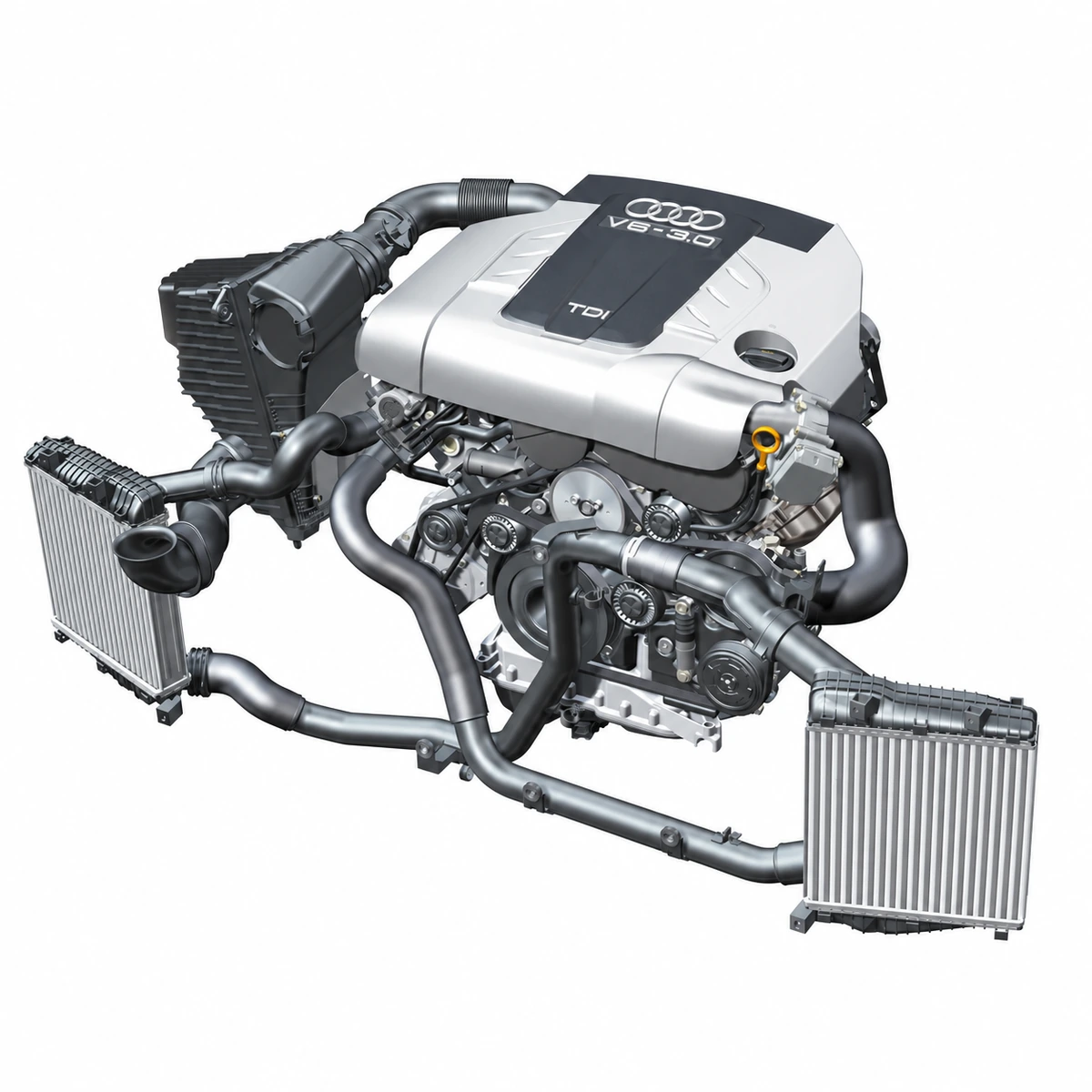
EA896 3.0 V6 TDI
Pulling power comes early. The EA896 delivers 406 lb-ft through a compact V6, with precise common-rail injection and a chain-driven valvetrain. In North America, the code to know is CATA.
Specifications
Architecture
- Family / engine code
- EA896 · CATA
- Layout / mounting
- V6 · longitudinal
- Displacement
- 2,967 cc / 3.0 L
- Bore × stroke
- 83.0 × 91.4 mm
- Compression ratio
- 16.8:1
- Firing order
- 1–4–3–6–2–5
Construction
- Cylinder block
- Compacted graphite cast iron
- Cylinder heads
- Aluminum alloy
- Crankshaft
- Forged steel · four main bearings
- Valvetrain
- DOHC per bank · 24 valves
- Camshaft drive
- Rear timing chains · geared cam links
- Balance shaft
- Single · chain driven
Power & fuel
- Advertised output
- 225 hp
- Peak power range
- 3,500–4,000 rpm
- Peak torque
- 406 lb-ft / 550 Nm
- Peak torque range
- 1,750–2,250 rpm
- Fuel injection
- Common rail · piezo · up to 2,000 bar
- Fuel specification
- Ultra-low-sulfur diesel
Air, cooling & lubrication
- Turbocharger
- Single · variable turbine geometry
- Charge-air cooling
- Twin air-to-air coolers · bypass control
- Intake / EGR
- Variable swirl flaps · cooled EGR
- Exhaust treatment
- Oxidation catalyst · DPF · SCR / DEF
- Oil pump
- Flow controlled · two pressure stages
- Engine-oil approval
- VW 507 00
CATA controllers & service fills
| Specification | 2009–2010 | 2011–2012 |
|---|---|---|
| Engine code | CATA | CATA |
| Bosch ECU | EDC17 | EDC17 |
| Q7 oil with filter* | 8.2 L | 8.2 L |
| Touareg oil with filter* | 8.3 L | 8.1 L |
Same engine code, different electronics. Confirm the ECU label and full hardware/software IDs before replacement or programming.
*Approximate reference fills: 2009/2012 Q7, 7L Touareg and 2012 7P Touareg. Follow the VIN-specific filling procedure and verify the final level.
Vehicles by engine code
| Engine code | Vehicle | Model years | Chassis |
|---|---|---|---|
| CATA | Audi Q7 TDI quattro | 2009–2012 | 4L |
| Volkswagen Touareg TDI | 2009–2010 | 7L | |
| Volkswagen Touareg TDI | 2011–2012 | 7P |
U.S. and Canadian factory applications. CATA is the engine code for all three entries.
Care & trouble spots
- Oil and service intervals. Use VW 507 00-approved oil. Follow mileage and time limits; dusty, cold or demanding use may require earlier attention. Check the level between services.
- Timing drive and leaks. Investigate new or persistent chain noise, oil-pressure warnings and coolant loss promptly. Diagnose the cause before replacing parts.
- Intake flaps and EGR. Check deposits, flap linkages and actuator operation when airflow faults appear. Clean affected parts as needed; cleaning cannot repair worn mechanisms.
- DPF pressure readings. Audi campaign 23L2 and Volkswagen 23M1 addressed sensor corrosion and ECM software on affected 2009–2012 vehicles. Check completion by VIN before assuming the filter needs replacement.
- DEF / SCR. Keep the correct AdBlue fluid topped up. Diagnose delivery, heating and sensor faults promptly when emissions or restart warnings appear.
- Fuel system. Keep fuel-filter servicing current. Low rail pressure, unusual pump noise or a no-start condition need proper fuel-supply testing.
- Turbo and airflow. Maintain clean oil, an unrestricted air filter and sound boost hoses. Warm up gently and let temperatures settle after sustained heavy loads.
Inspect first; clean as needed. Base intake and EGR cleaning on component condition, symptoms and service history.
References & image credit
| Topic | Sources |
|---|---|
| Design & specifications | Volkswagen SSP 840193 Audi SSP 941803 |
| Vehicles & model years | Audi: U.S./Canada Q7 2009–2012 Volkswagen: U.S./Canada Touareg 2009–2012 Volkswagen: CATA applications |
| Oil approval & service fills | Audi: 2009 Q7 Audi: 2012 Q7 Volkswagen: Touareg 7L Volkswagen: 2012 Touareg |
| Maintenance & diagnosis | Audi: 2012 service schedule Volkswagen: low fuel-pressure investigation Garrett: turbo failure causes |
| Engine image | Audi AG |
Original ECU5 editorial overview of North American CATA applications. Engine image: Audi AG; edited for layout. Volkswagen and Audi names identify the vehicles discussed; this article is independently produced.