Ford Cyclone Duratec 37 3.7L V6: Specs, PCM & Maintenance
Ford · Gasoline engine
Cyclone / Duratec 373.7L · Ti-VCT V6
The 3.7L Cyclone gives the 2011–2014 F-150 a naturally aspirated alternative to the turbo V6 and V8. Independent cam timing and port injection provide 302 hp from an aluminium DOHC engine. Its longitudinal truck layout needs to be distinguished from transverse Cyclone installations.

Specifications
Architecture
- Configuration
- V6 · DOHC
- Block / heads
- Aluminium / aluminium
- Compression
- 10.5:1
- Cam drive
- Timing chains
Fuel & application
- Induction
- Naturally aspirated
- Fuel delivery
- Sequential port injection
- Fuel grade
- 87 AKI / E85 when FFV-labelled
- Installation
- Longitudinal · F-150
Vehicles & factory output
| Engine variant | Vehicle | Model years | Platform | Factory rating |
|---|---|---|---|---|
| Duratec 37 Ti-VCT | Ford F-150 | 2011–2014 | P415 | 302 hp / 278 lb-ft |
| 3.7L · Mustang | Ford Mustang V6 | 2011–2014 | S197 | 305 hp / 280 lb-ft |
| 3.7L · Mustang | Ford Mustang V6 | 2015–2017 | S550 | 300 hp / 280 lb-ft |
Longitudinal F-150 and Mustang applications are shown. Transverse versions have a different coolant-pump arrangement; do not transfer their service procedures to these engines.
Engine controller
| Application | Supplier & family | Hardware / identification |
|---|---|---|
| Mustang · 2011–2014 | Continental 5WY8 | MPC5554; catalogue hardware group includes BR3A-12A650-xx. |
| Mustang · 2015–2017 | Continental EMS24xx | TC1791; verify full EMS suffix. |
| F-150 · 2011–2014 | Ford PCM · application-specific ID | Confirm the truck’s installed subtype and strategy; Mustang hardware does not identify the F-150 module. |
Match the complete Ford engineering/service number, supplier hardware ID and diagnostic strategy/calibration ID. The same engine size can use different modules; processor names alone do not identify an ECU.
Catalogue entries identify application families, not a guaranteed ECU for every build year. Confirm the installed unit.
Common faults & maintenance
- Misfire diagnosis. Check plugs, coils and injector contribution, then compression if a fault remains on one cylinder.
- Cam-control faults. Low oil, oil-pressure problems or timing wear can trigger VCT/correlation faults; check mechanical conditions before changing the PCM.
- Cooling and air leaks. Inspect the truck’s coolant pump, hoses and PCV/intake plumbing during service.
Keep it healthy. Use the Ford oil specification and viscosity for the exact model year. Follow the normal or severe-use schedule for towing, extended idling, dust and repeated short trips; check oil and coolant between services. Diagnose deposits or poor running before prescribing cleaning intervals.
References
| Topic | Source |
|---|---|
| Factory output | Ford 2014 F-150 brochure |
| Specifications | Ford 2014 F-150 engine specifications |
| PCM identification | Ford Module Programming user guide |
| 5WY8 hardware | AutoTuner · Continental 5WY8 |
| EMS hardware | AutoTuner · Continental EMS24xx |
| Vehicle hardware applications | Alientech live vehicle catalogue |
| Ford controller naming | HP Tuners TDN guide · Ford controller families, p. 76 |
| Mustang V6 output | Ford 2017 Mustang brochure |
| Revised GT factory output | Ford 2013 Mustang brochure |
| PCM hardware compatibility | BenchForce Copperhead application guide |
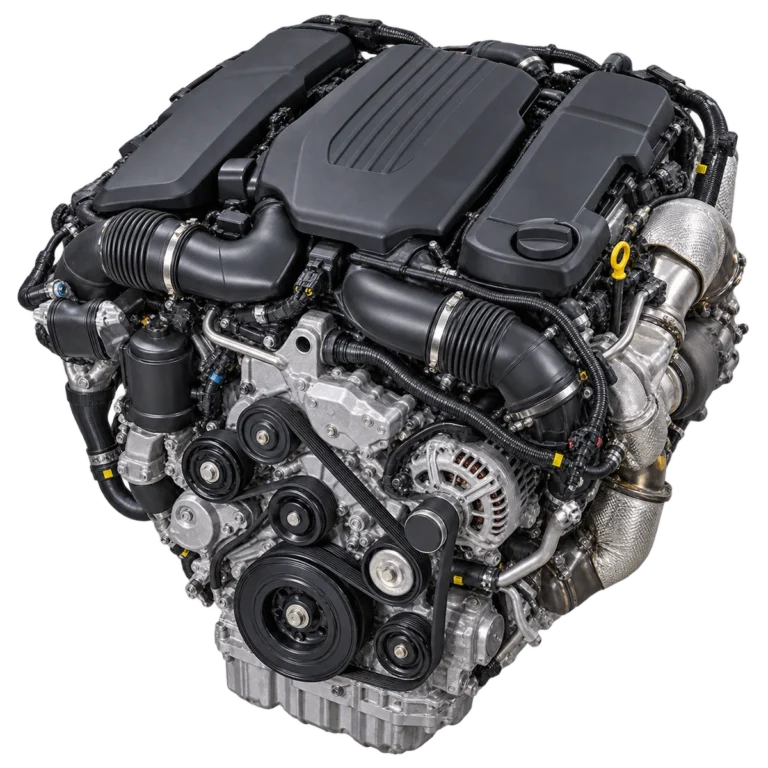
| Engine photo | Cyclone 3.7L Ti-VCT cutaway. Photo: Christian Flores · CC BY-SA 2.0. Cropped/resized and square-formatted. |
Listed vehicles are selected North American applications. Ratings and equipment vary with model year, fuel and emissions specification. Verify the VIN, engine label and PCM identification before ordering parts or software. Service bulletins describe affected conditions and do not establish a failure rate or current warranty entitlement.