Porsche MA1.01 3.8 DFI: Specs, Engine Codes, ECUs & Maintenance
Porsche · Engine Information · U.S. & Canada
MA1.01 3.8 DFI · S & GTSThe 997.2 Carrera S combines a 3.8-litre direct-injected flat-six with the new 9A1 architecture. The GTS adds a tuned intake and sport exhaust for a stronger top end, while the limited Speedster pairs the 408 hp version exclusively with PDK.
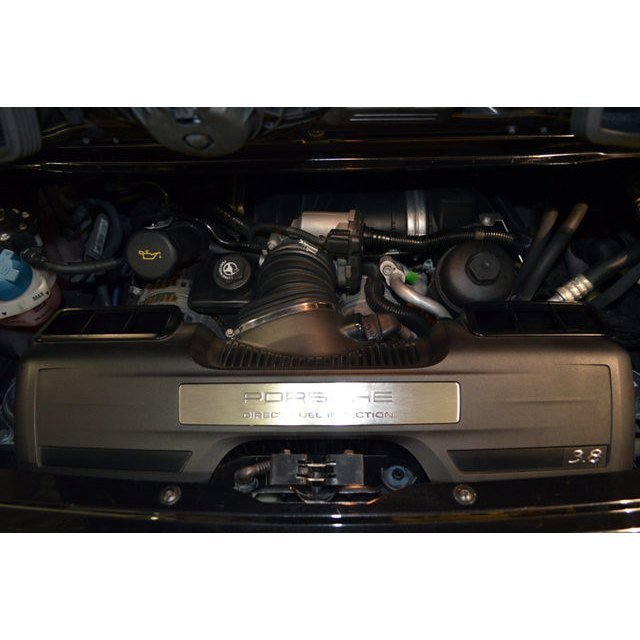
Engine & construction
- Code / family
- MA1.01 · 9A1
- Displacement
- 3,800 cc
- Bore × stroke
- 102 × 77.5 mm
- Layout
- Flat-six · DOHC · 24 valves
- Injection / cams
- DFI · VarioCam Plus
Output & driveline
- Carrera S / 4S
- 385 hp / 310 lb-ft
- GTS / Speedster
- 408 hp / 310 lb-ft
- Lubrication
- Integrated sump · controlled oil pump
- Transmission
- 6-speed manual / 7-speed PDK
- Speedster
- 7-speed PDK only
Vehicles & model years
| Models | Platform | Model years | Engine codes |
|---|---|---|---|
| 911 Carrera S / 4S; Targa 4S | 997.2 | 2009–2012 | MA1.01 |
| 911 Carrera GTS / Carrera 4 GTS | 997.2 | 2011–2012 / 2012 | MA1.01 family |
| 911 Speedster | 997 | 2011 | MA1.01 family |
Horsepower follows Porsche North American published specifications. Power-kit suffixes should be checked against the engine label.
Engine controllers
| Application | DME / ECU | Identification details |
|---|---|---|
| 997.2 3.8 DFI S / GTS / Speedster | Continental / Siemens SDI3 | Tool hardware listings: Infineon TC1796 · 2 MB flash. |
GTS intake hardware and calibration differ. Confirm the DME part number and software before choosing a file.
Common issues & maintenance
Porsche documented pulsating or whistling noise from the crankcase oil separator. Check crankcase vacuum and the separator before replacing unrelated parts.
On early DFI cars, P0190/P1030 or starting trouble may involve the pressure sensor. Porsche cautioned against replacing high-pressure pumps without diagnosis.
Specialists have documented Alusil bore damage in MA1 engines. Investigate oil use or mechanical noise; this does not establish a universal failure rate.
Maintain the specified oil level and approval, inspect coolant leaks and investigate changes in oil use. Fuel-pressure sensor faults and separator noise need targeted diagnosis. Adjust oil intervals for load, operating temperature and repeated short journeys.
References
| Technical data | Porsche North America 2011 Carrera specifications |
| Oil separator | Porsche technical bulletin 05/14 |
| Cylinder condition | LN Engineering MA1 inspection guidance |
| GTS | Porsche Cars North America GTS launch release |