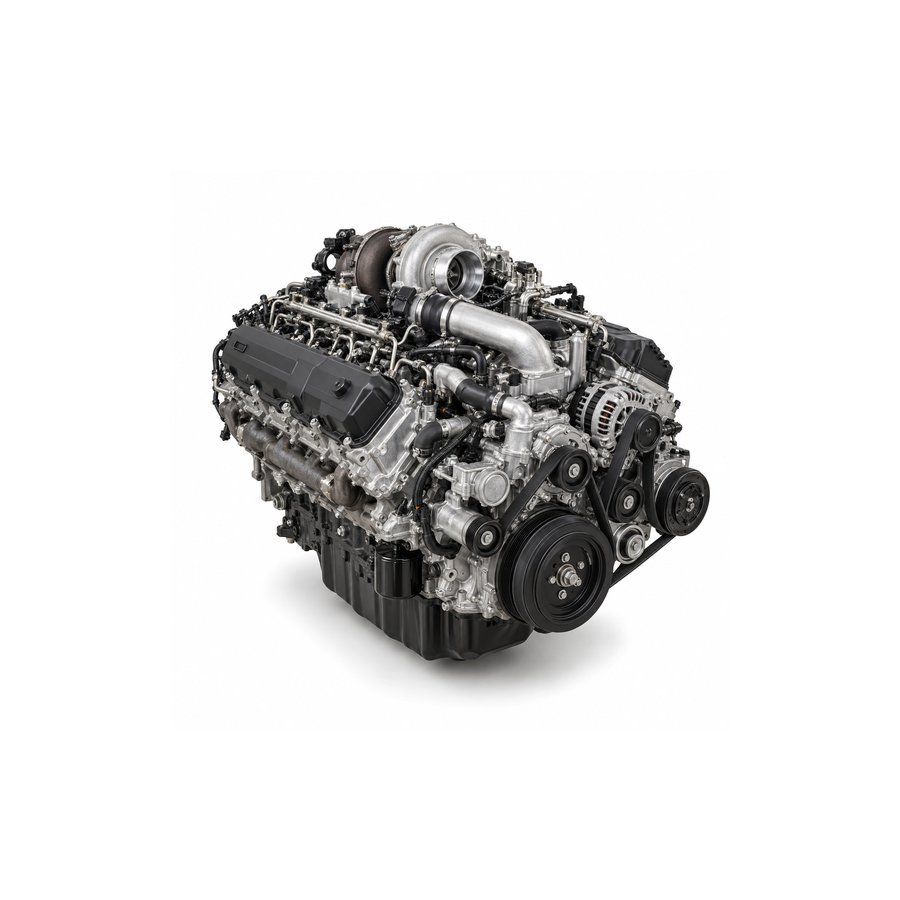
GM Duramax 6.6L L5P (2017–2023): Specs, Engine Codes, Controllers & Maintenance
Engine Information · GM · Duramax · L5P · original output
Duramax 6.6L L5P (2017–2023)
The L5P brings 445 hp and 910 lb-ft to GM’s HD pickups. Its Denso controller and fuel system are major identification points, while the 2020 truck revision changes the transmission from six speeds to ten.
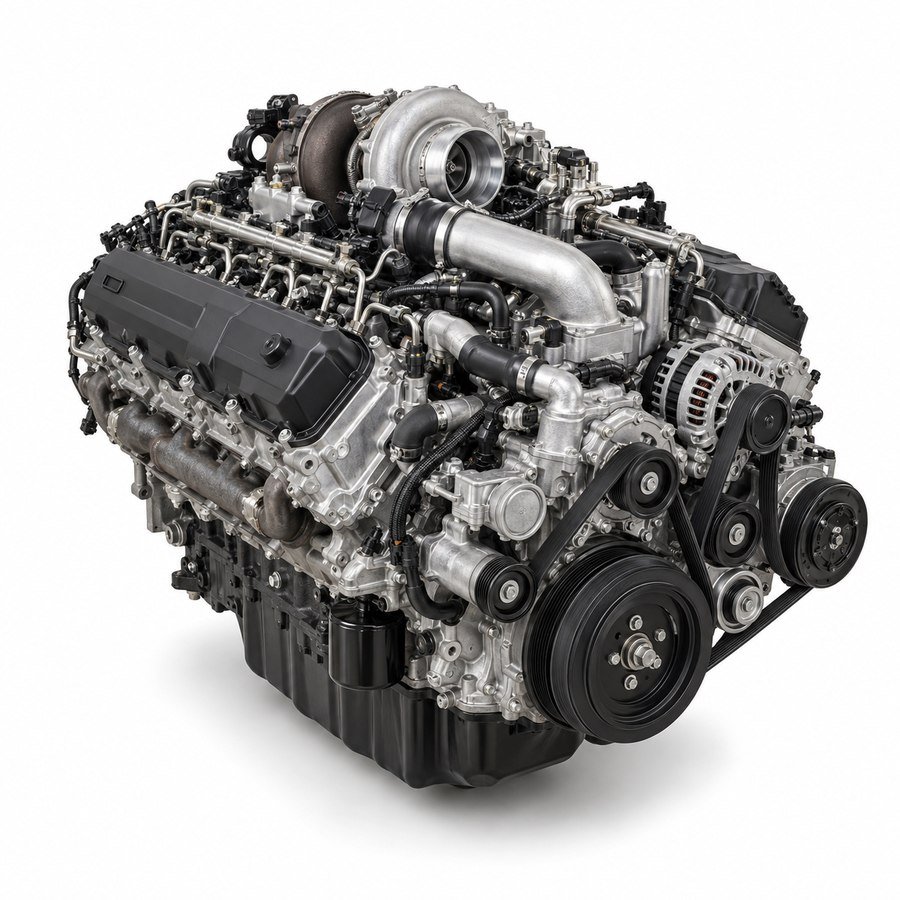
Engine construction
| Specification | Details |
|---|---|
| Capacity / layout | 6,604 cc · 90° V8 |
| Bore × stroke | 103 × 99 mm |
| Construction | Cast-iron block · aluminum heads |
| Valve gear | OHV · 32 valves |
| Fuel / induction | Common-rail direct injection · variable-geometry turbo |
| Compression | 16.0:1 |
| Aftertreatment | EGR · DPF · SCR/DEF |
Codes & output
| RPO / version | Power / torque | Key difference |
|---|---|---|
| L5P | 445 hp / 910 lb-ft | 2017–2023 HD pickup |
SAE horsepower; torque in lb-ft. Ratings are for the stated application and fuel, rather than every vehicle with this RPO.
Vehicles & model years
| Brand | Model | Model years | Platform / chassis | Engine RPO |
|---|---|---|---|---|
| GMC / Chevrolet | Sierra / Silverado HD | 2017–2019 | K2XX | L5P |
| GMC / Chevrolet | Sierra / Silverado HD | 2020–2023 | T1XX HD | L5P |
U.S. and Canadian applications within the 2005–2026 matrix scope. Engine availability depends on trim, build date and emissions certification.
Engine controllers
| Application / revision | ECM or PCM | Identification & function |
|---|---|---|
| 2017–2023 | Denso E41 ECM | Common-rail injection, turbo, torque and emissions control |
| 2017–2019 | T87A transmission controller | Six-speed Allison transmission |
| 2020–2023 | T93 transmission controller | Ten-speed transmission; separate from the ECM |
Identify the module from its service number, operating-system ID and VIN. The ECM/PCM and transmission controller have separate calibrations on many applications; a matching RPO alone does not make a replacement module plug-and-play.
Common issues & maintenance
- Injector and fuel-pressure connectorsIntermittent misfires and pressure-related codes can come from terminal damage or corrosion. GM advises checking connectors before replacing injectors; compare scan data with circuit tests.
- Aftertreatment faultsDEF delivery, NOx sensors and exhaust-pressure/temperature inputs can set service warnings. Diagnose the complete system; a DPF code does not establish that the filter itself is defective.
- Air and fuel restrictionsLeaks in boost plumbing, dirty filters and contaminated fuel can cause reduced performance. Confirm supply pressure and airflow before condemning the turbo or injection pump.
Keep it healthy. Follow the VIN-specific oil and fuel-filter schedule, shortening service for towing, idling and repeated short trips where the manual requires it. Drain water from fuel when indicated, maintain the cooling stack and investigate falling rail pressure before replacing expensive fuel-system parts. Use the prescribed diesel oil viscosity for the climate. Check connector condition during diagnosis and avoid treating an electrical injector code as proof of a failed injector.
References & technical sources
| Source | Reference |
|---|---|
| GM applications & RPO diagnostic matrices | View source |
| GM TechLink 2026 U.S./Canada oil chart | View source |
| HP Tuners L5P controller/year table | View source |
| GM injector-connector diagnostic guidance | View source |
| GM fuel-pressure connector guidance | View source |
| 2020 GMC factory specifications | View source |