Ford Power Stroke 6.7L Gen 2: Specs, PCM, Model Years & Maintenance
Ford · Diesel engine
Power Stroke 6.7LScorpion · Generation 2
The second-generation 6.7L arrived in 2015 with a larger turbocharger and higher output. Further updates raised pickup torque again for 2017 and 2018, making model-year identification essential.
Specifications
Engine construction
- Layout
- V8 · OHV · reverse-flow heads
- Block / heads
- CGI / aluminium
- Bore × stroke
- 3.90 × 4.25 in
- Cam drive
- Gear driven
Fuel & emissions
- Injection
- High-pressure common rail
- Induction
- Updated turbo · charge-air cooler
- Aftertreatment
- EGR · DPF · SCR / DEF
- Transmission
- Six-speed TorqShift automatic
Vehicles & factory output
| Engine variant | Vehicle | Model years | Platform | Factory rating |
|---|---|---|---|---|
| Gen 2 · initial pickup rating | Ford F-Series Super Duty pickups | 2015–2016 | Super Duty | 440 hp / 860 lb-ft |
| 2017 pickup update | Ford F-Series Super Duty pickups | 2017 | Super Duty | 440 hp / 925 lb-ft |
| Later Gen 2 pickup rating | Ford F-Series Super Duty pickups | 2018–2019 | Super Duty | 450 hp / 935 lb-ft |
These are pickup ratings. Chassis-cab calibrations differ; “2017–2019: 450 hp / 935 lb-ft” would incorrectly combine different model years.
Engine controller
| Application | Supplier & family | Hardware / identification |
|---|---|---|
| Super Duty · 2015–2016 catalogue applications | Bosch EDC17CP05 | TC1797; recorded for the initial Gen 2 trucks. |
| Super Duty · 2017–2019 catalogue applications | Bosch EDC17CP65 | TC1793; later pickup/cab variants have their own calibrations. |
| 6R140 transmission | Separate transmission-control module | Independent identity from the diesel ECU. |
Initial Gen 2 applications are catalogued with EDC17CP05; later trucks include EDC17CP65. Match hardware, strategy, injector data and emissions configuration rather than identifying the ECU from peak power. Match the complete Ford engineering/service number, supplier hardware ID and diagnostic strategy/calibration ID. The same engine size can use different modules; processor names alone do not identify an ECU.
Catalogue entries identify application families, not a guaranteed ECU for every build year. Confirm the installed unit.
Common faults & maintenance
- Boost-control loss of power. TSB 19-2143 includes certain 2015–2016 trucks among its affected builds. Verify the scope and test boost-control hardware rather than extending it to every 2015–2019 engine.
- Aftertreatment faults. DPF loading, EGR restrictions and NOx/DEF-system faults can cause warnings or reduced power. Read the full code set and regeneration data before selecting the repair.
- High-pressure fuel-system risk. Maintain filters and the water separator and use suitable diesel. Contamination or low supply pressure warrants prompt diagnosis; a later-generation recall should not be applied to these trucks without a VIN match.
Keep it healthy. Follow the exact-year diesel oil and severe-duty schedule, including extended idling and towing. Service both specified fuel filtration stages and drain water as directed. Keep intake and charge-air plumbing sound, use correct DEF and investigate repeated regeneration or coolant loss.
References
| Topic | Source |
|---|---|
| Generation change & specifications | Ford 2015 Super Duty brochure |
| 2017 factory output | Ford 2017 Super Duty brochure |
| 2018 factory output | Ford 2018 Super Duty brochure |
| Controller family / example hardware | Bosch EDC17CP05 catalogue entry |
| Underboost diagnosis | Ford TSB 19-2143 |
| Vehicle hardware applications | Alientech live vehicle catalogue |
| Diesel control hardware | AutoTuner · Bosch EDC17CP65 |
| PCM / separate transmission modules | HP Tuners · Ford vehicle and controller coverage |
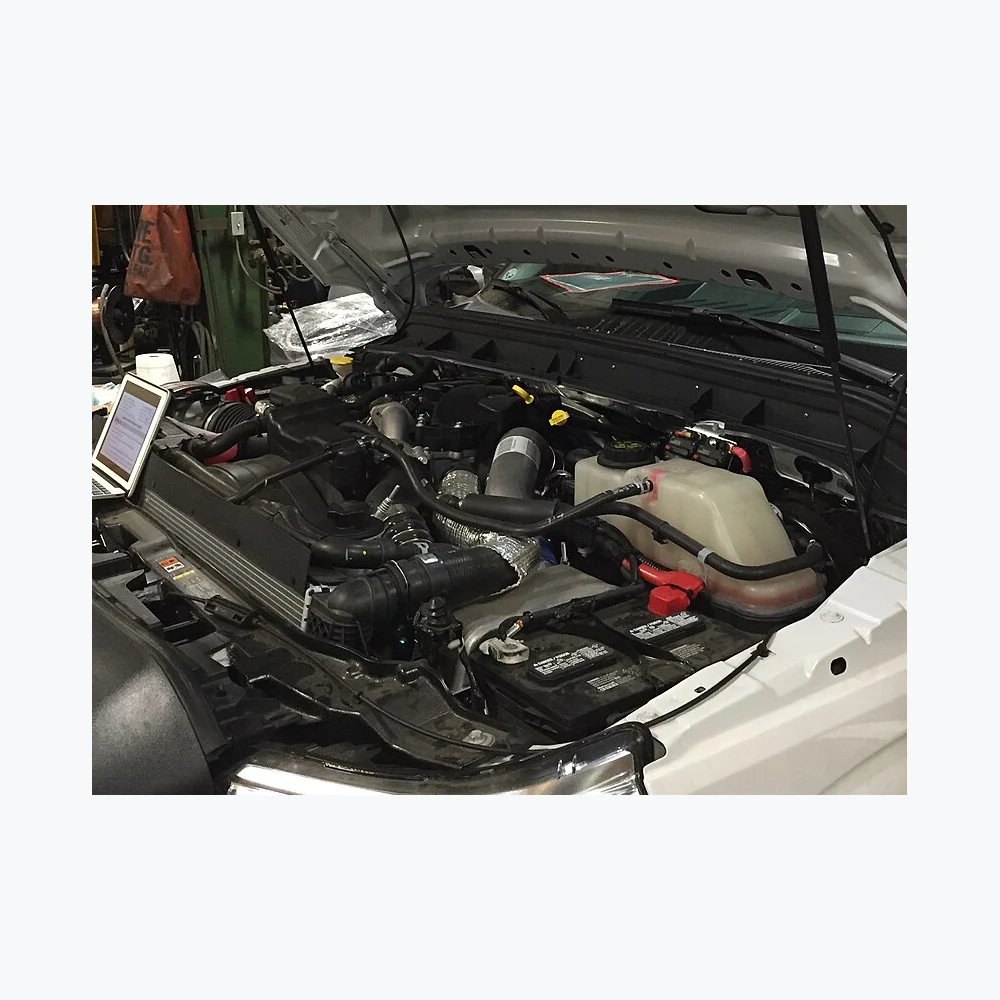
| Engine photo | Ford 6.7L Power Stroke V8 engine bay, photographed in 2015. Photo: Toshio Suzuki / Bureau of Land Management · Public domain. Cropped/resized and square-formatted. |
Listed vehicles are selected North American applications. Ratings and equipment vary with model year, fuel and emissions specification. Verify the VIN, engine label and PCM identification before ordering parts or software. Service bulletins describe affected conditions and do not establish a failure rate or current warranty entitlement.